Loprin Tablets Uses, Dosage Administration, Side Effects
Loprin Tablets
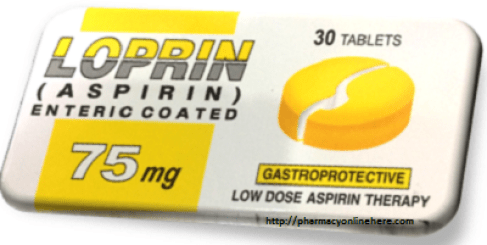
Loprin Tablets contain a very useful ingredieng named Aspirin. Aspirin is an NSAID which has anti-inflammatory, analgesic, antipyretic and antithrombotic activity. It interferes with prostaglandin synthesis by irreversibly inhibiting cyclooxygenase. It was synthesized in year 1853 and started used in 1899. This replaced the natural products in use at that time and has remained one of the most widely employed remedies for over 90 years.
Composition
Loprin 75 mg tablets contains. : Aspirin B.P 75 mg
Loprin 150 mg tablets contains. : Aspirin B.P 150 mg
Indications
Aspirin (Loprin) Tablets uses for the secondary prevention of thrombotic cerebrovascular or cardiovascular disease and following by pass surgery.
Loprin Tablets Dosage Administration
- Aspain 75 mg is for oral administration to adults only.
- Take the tablet with water, do not out, chew or crush the tablet. swallow whole.
- The advice of a doctor should sought before commencing therapy for the first time.
- The usual loprin dosage for long term use, is Loprin 75 mg, 150 mg once daily. In some circumstances a higher dosage may be appropriate. Especially in the short term and up to 300 mg a day may used on the advice of a doctor.
In Elderly:
The risk benefit ratio of the antithrombotic action of aspirin has not been fully established.
Children:
Do not give to children aged under 16 years, unless specifically indicated e.g. for Kawasaki’s disease.
Loprin Tablets Contraindications
- Hypersensitivity to aspirin or any other NSAIDs, or any of the excipients
- Active peptic ulceration or history of peptic ulceration
- Haemophilia, other coagulopathies including hypoprothrombinaemia or concurrent anticoagulant therapy.
- Gout
- Do not give to children aged under 16 years, unless specially indicated e.g. for Kawasaki’s disease
Loprin Tablets Warnings And Precautions
Caution should be exercised in patients with allergic disease, impairment of hepatic or renal function and dehydration. Aspirin may also precipitate bronchospasm or induce attacks of asthma in susceptible subjects. The elderly may be more susceptible to the toxic effects of subjects. Caution should be taken in patients with glucose-6-phosphate derhydrogenase deficiency as haemolytic anaemia may occur. Aspirin may interfere with insulin and glucagon in diabetes. Patients should report any unusual bleeding symptoms to their physician. There is a possible association between aspirin Reye’s Syndrome when given to children. Reye’s Syndrome is very rare disease which effects the liver and the brain and can be fatal.
For the reason aspirin should not be given to children aged under 16 years unless specifically indicated. e.g. for Kawasaki’s disease. Salicylates should not be used in patients with a history of coagulation abnormalities as they may also induce gastro-intestinal haemorrhage, occasionally major. Aspirin should not be taken by patients with a stomach ulcer or a history of stomach ulcers. Before commencing long term aspirin therapy for the management of cardiovascular or cerebrovascular disease patients should consult their doctor who can advise on the relative benefits versus the risk for the individual patients. Patients with hypertension should be carefully monitored.
Loprin (Aspirin) Drug Interactions
Anticoagulants:
Aspirin may potentiate the effect of heparin and increase the risk of bleeding with oral anticoagulants, antiplatateletagents and fibrinolytics.
Other Non steroidel Anti inflammatory Drugs:
Concurrent administration can increase side effects. Use of two or more NSAID increase risk of estrointestinal haemorrhage. Experimental data suggest that ibuprofen may inhibit the effect of low dose. aspirin on platelet aggregation when they dosed concomitantly. However, the limitations of these data and the uncertainties regarding extrapolation of ex vivo data to the clinical situation imply that. no firm conclusions can made for regular relevant effect considered to likely for occasional ibuprofen use.
Antacids And Adsorbents:
The excretion of aspirin is increase in alkaline urine: kaolin possibly reduces absorption.Patients should be advised against ingesting anttacids simultaneously to avoid premature drug release.
Corticosteroids:
The risk of gastrointestinal bleeding and ulceration is increased. Corticosteroids reduce the plasma salicylate concentration and saliycylate toxicity may occur following withdrawal of corticosteroids.
Carbonic Anhydrase Inhitbitors:
Reduced excretion of aceztazolamide: salicylate intoxication has occurred in patients on high dose salicylate regimes and carbonic anhydrase inhibitors. Concurrent administration of carbonic anhydrase inhibitors such as acetazolamide and salicylates may result in severe acidosis and increased central nervous system toxicity.
Antacids And Adsorbents:
The excretion of aspirin increased in alkaline urine; kaolin possibly reduced absorption. Patients should advised against ingesting antacids simultaneously to avoid premature drug release.
Mifepristone;
The manufacturer of mifepristone recommends that aspirin should be avoided until eight to twelve mifepristone has been discontinued.
Antimetabolites;
The activity of methotrexate may markedly enhanced and its toxicity increased.
Antibacterials:
The toxicity of sulfonamides may increased.
Alcohol:
Some of the effects of aspirin on the gastrointestinal tract enhanced by alcohol.
Antiemetics:
Some of the effects of aspirin on the gastrointestinal tract enhanced by alcohol.
ACE inhibitors:
Aspisin may reduce the antihyopertensive effect of ACe inhibitors.
Anti-Eplleptics:
May enhance the effects of phenytoin and sodium valproate.
Dluretics:
Antagonism of the diuretic effect of spironolactone.
Hypoglycaemic Agents:
Aspirin may enhance the effects of insulin and oral! hypoglycaemic agents.
Leuktriene Antagonists:
The plasma concentration of zafirlukst increased.
Uricosurice:
Effect of probenecid and sulfinpyrazone may reduced.
Thyroid Function Tests:
Aspirin may interfere with thyroid function tests.
Loprin In Pregnancy And Lactation
Loprin In Pregnancy:
Although clinical and epidemiological evidence suggests the safety of aspirin for use in pregnancy. Caution should exercised when considering use in pregnant patients. Maternal use of aspirin prior to birth may increase the risk of intracranial haemorrhage in premature or low birth wight infants and may contribute to maternal and neonatal bleeding . Regular use of high doses could impair platelet function and produce hypoprothrombinaemia in the infant if neonatal Vitamin K stores are low. Prolonged pregnancy & labour, with increased bleeding before & after delivery, decreased birth weight and increased rate of still birth have been reported with high blood salicylate levels. With high doses there may be premature closure of the ductus arteriosus and possible persistent pulmonary hypertension in the newborn. Analgesic doses of aspirin should be avoided who during the last trimester of pregnancy.
Lactation:
As aspirin excreted in breasted milk aspirin should not taken by patients who breast feeding as there a risk of Reye’s syndrome in the infant. High maternal doses may impair platelet function in the infant.
Loprin Tablets Side Effects
Loprin Tablets Side effects are generally mild and infrequent:
Blood And The Lymphatic System Disorders:
Aspirin prolong bleeding time decreased platelet adhesiveness may also occur. Bleeding disorders such as epistaxis, haematuria, purpura, ecchymoses, haemorrhage have occasionally been reported. Fatalities have occured haemolytic anaemia can occur in patients with glucose-6-phosphate dehydrogenase (G6PD) deficiency.
Immune System Disorder :
Hypersensitivity reactions included skin rashes, urticaria, angioedema, asthma, bronchospasm, rhinitis and rarely anaphylaxis.
Ear & Labyrinth disorder:
Tinnitus.
Gastrointestinal Disorders:
Gastrointestinal irritation is common in patients taking aspirin preparations. And nausea vomiting dyspepsia may occur following chronic gastrointestinal blood loss or acute haemorrhage.
Loprin Tablets Overdosage
Salicylate poisoning is usually associated with plasma concentrations >350mg/L (2.5mmol/L). Most adult deaths occur in patients whose concentrations exceed 700 mg/L (5.1mmol/L). Single doses less than 100 mg/kg are unlikely to cause serious poisoning.
Overdose Symptoms
Common Features
Include vomiting dehydration tinnitus, vertigo, deafness, sweating, warm extremities with bounding pulses, increased respiratory rate and hyperventilation. Some degree of acid-base disturbance is present in most cases. A mixed respiratory alkalosis and metabolic acidosis with normal or high arterial pH (normal or reduced hydrogen ion concentration) usual in adults or children over the age of four years. In children four years or less a dominant metabolic acidosis with low arterial pH (raised hydrogen ion concentration) is common. Acidosis may increase salicylate transfer across the blood brain barrier.
Uncommon Features
Include haematemesis, hyperpyrexia, hypoglycaemia, hypokalaemia, thrombocytopaenia, increased INR/PTR, intra vascular coagulation, renal failure and non-cardiac pulmonary oedema. Central nervous system features including confusion, disorientation, coma and convulsions are less common in adults than in children.
Management
Give activated charcoal if an adult presents within one hour of ingestion of more than 250 mg/kg. The plasma salicylate concentration should measured, although the severity of poisoning cannot determined from this alone and the clinical and biochemical features must taken in to account. Elimination increased by urinary alkalinisation, which achieved by the administration of 1.26 % sodium bicarbonate. The urine pH should monitored. Correct metabolic acidosis with intravenous 8.4 % sodium bicarbonate (first check serum potassium). Forced diuresis should pulmonary oedema. Haemodialysis the treatment of choice for severe poisoning and should considered in patients with plasma salicylate concentrations > 700 mg/L (5.1mmol/L) or lower concentrations associated with severe clinical or metabolic features. Patients under 10 years or over 70 have increased risk of salicylate toxicity and may require dialysis at an earlier stage.
Loprin Medicine Storage Instructions
Store the medicine below 25 C temperature. Protect from sun light and heat. Store the medicine in a dry place. Always keep all the medicines out of the reach of the children.
More Medicine Information: Gravibinan Injection Uses, Dosage Administration And Side Effects
Loprin 75 MG, 100 MG Tablets
Share this: