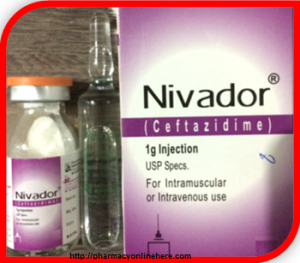
Nivador (Ceftazidime) Injection
Ceftazidime Injection (Nivador Injection) is a semisynthetic, broad spectrum, beta lactam antibiotic for parenteral administration. Meanwhile, that belongs to cephalosporin 3rd generation.
More Medications: Lasix (10MG, 20MG, 40MG) Tablets
Nivador Injection Composition
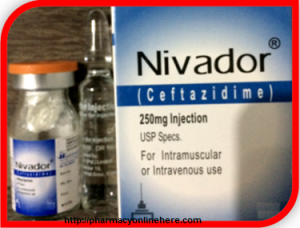
Nivador Injection 250 MG Each Vial Contains
Sterile Powder Of Ceftazideme Petahydrate USP Equivalent To Ceftazidime <———> 250 mg
Nivador Injection 500 MG Injection Each Vial Contains
Sterile Powder Of Ceftazidime Pentahydrate USP Equivalent To Ceftazidime <———> 500 mg
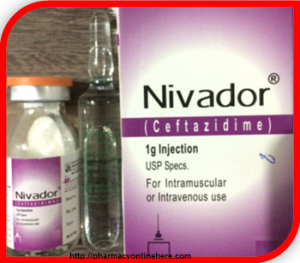
Ceftazidime 1 G Injection Each Vial Contains
Sterile Powder Of Ceftazidime Pentahydrate USP Equivalent To Ceftazidime <———-> 1 g
Nivador Injection Indications
Firstly, Ceftazidime (Nivador) injection indicate and use for the treatment of patients with infections caused by susceptible strains of the designated organisms in the disease. However it indicated in the conditions Like.
Lower Respiratory Tract Infections:
- Neumonia, caused by pesudomonas aeruginosa and other pseudomonas spp;
- Haemophilus influenzae including Ampicilin resistant strains
- Klebsiella spp
- Enterobacter spp:
- Proteus mirabilis
- Escherichia coli
- Serratia spp
- Citrobacter spp
- Streptococcus pneumoniae
- Staphylococcus aureus
- Methicillin susceptible strains
Skin and Skin Structure Infections
- Cause by Pseudomonas aeruginosa
- Klebsiella spp
- Escherichia coil
- Proteus spp, including proteus mirabilis and indole positive proteus,
- Enterobacter spp
- Serratia spp
- Staphylococcus aures
- Methicillin susceptible strains
- Streptococcus pyogenes
Urinary Tract Infections
- Cause By Pseudomonas Aeruginosa
- Enterobacter spp; including proteus mirabilis and indole positive protenus
- Klebsiella spp
- Escherichia coli
Bacterial Septicemia
- Cause by Pseudomonas aeruginosa
- Klebsiella spp
- Haemophilus influenzae
- Escherichia Coil
- Serratia spp
- Streptococcus Pneumoniae
- Staphylococcus Aureus
Bone and joint Infection
- Cause by Pseudomonas Aeruginosa
- Klebsiella spp
- Enterobacter spp
- Staphylococcus Aureus
Gynecologic Infections
- Endometritis
- Pelvic Cellulits
- Other infections of the female genital tract caused by Escherichia coil
Intra Abdominal Infection
- Peritonitis caused by Escherichia coil
- Klebsiella spp
- Staphylococcus Aureus (Methicillin susceptible strains)
- Polymicrobial infections caused by anaerobic organisms organisms
- Bacteroides spp
Central Nervous Syetem Infections
- Menigitis, cause by Haemophilus influeze and Neisseria meningitidis.
However, Ceftazidime injection has also used successfully in a limited number of cases of meningitis. And due to Pseudromonas aeruginosa and Streptococcus pneumoniae.
Ciftazidime Injection Contraindications
Most importantly, Ceftazidime contraindicated in patients who have shown hyoerensensitivity to seftazidime of the cephalosprin group of antibiotics .
Nivador (Ciftazidime) Injection Dosage Administration
Most importantly, It may administered either intravenously or intramuscularly after reconstitution. However, Nivador (Ceftazidime) Injection dosage and route of administration should determined by severity of infection. On the other hand susceptibility of the causative organism(s) and condition of the patient should also examined.
Adults
Meanwhile, 1 g to 6g IM of IV in 2 or 3 divided doses generally used in patients with normal renal function. On the other hand for less severe infection 500 mg to 1 g every 12 hours, moderate to severe infections 1 g every 8 hours or 12 hours. But For most severe infection 2 g every 8 or 12 hours dose recommended .
Infants And Children
Consequently, 30 to 100 mg/kg/day in 2 or 3 divided doses. However, Doses up to 150 mg/kg/ day (Maximum 6 g/day) in three divided doses given to infection immuno comprised or fibrocystic children with meningitis.
Neonates
However, In children aged one month or less the recommended dose is 25-50 mg/kg of ceftazidime given twice daily.
Use in Elderly
Most importantly, In acutely ill elderly patients with reduced renal clearance of ceftazidime the daily dosage should not exceed 3 mg.
Impaired Hepatic Function
On the other hand no adjustment dosage adjustment required for patients with hepatic dysfunction provided renal function not impaired.
Impaired Renal Function
Furthermore, In patients with impaired renal function the dosage of ceftazidime may need to be reduced. Meanwhile, following a loading dose of 1 g. On the other hand the maintenance doses are based on the creatinine clearance.
However the Suggested maintenance doses are;
- For creatinine clearance 31 to 50 ml per min 1 g every 12 hours
- Or creatinine clearance 16 to 30 ml per min 1 g every 24 hours
- For creatinine clearance 6 to 15 ml per min 0.5 g every 24 hours
- For creatinine clearance 5 ml per min 0.5 every 48 hours
In conclusion, Ceftazidime injection may given intravenously or by deep IM injection into a large muscle mass. Like, the upper outer quadrant of the gluteus maximus or lateral part of the thigh. On the other hand Intra arterial administration should be avoided.
Ceftazidime (Nivador) Injection Preparation
Consequently, for direct intramuscular injection reconstitute with sterile water for injection. Similarly, Use 1.0 ml , 5 ml 10 ml for 250 mg, 500 mg and 1 g respectively. However the Effervescence occurs on addition of water for injection.
Stability of the Reconstituted Solution;
Most importantly, Ceftazidime injection when constituted as directed with water for injection maintains satisfactory potency for 12 hours hours at room temperature or for days under refrigeration.
Nivador (Ceftazidime) Injection Storage Instructions
Most importantly, keep all the medicine out of the reach of the children. On the other hand avoid the medicine from direct sun light and heat. Similarly, store the injection between 15 C to 30 C temperature.
More Medicine Information: Qluz Tablets (Piroxicam) Uses, Dosage, Side Effects, Storage Instructions
Nivador (Ceftazidime) Injection