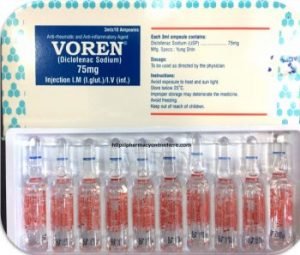
Voren Tablets 50MG Diclofenac Sodium Uses Dosage Side Effects
Voren Tablets, Capsule, Injection contains the most useful drug named Diclofenac Sodium. Meanwhile, Diclofenac Sodium Tablets, Capsules, Injections a Non-Steroidal Anti-Inflammatory Drug, which is a simple phenylacetic acid derivative. On the other hand, it resembles both the flurbiprofen and meclofenamate. Therefore, it reduces the fever and inflammation or relieves pains.

More Useful Links: Pharmaton Kiddi Syrup
Voren Medicine Composition
Each Voren 25MG Tablet Contains : Diclofenac Sodium 25MG
Each Voren 50MG Tablet Contains : Diclofenac Sodium 50MG
Voren 50MG Microtech Capsule Contains : Diclofenac Sodium 50MG
Each Voren SR 100MG Tablet contains : Diclofenac Sodium 100MG
Each Voren Injection 25MG/ML Contains :
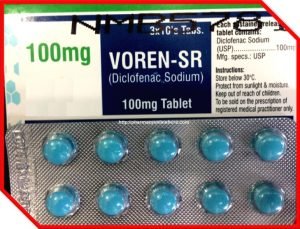
Voren Tablets, Capsules, Injections Medication Uses & Indications
- Acute gout
- Pain and inflammation in rheumatic disease in other musculoskeletal disorder
- Rheumatiod Arthritis
- Osteroarthritis
- Periarthritis (especially frozen shoulder)
- Low back pain
- Tendinitis
- tenosynovitis
- Bursitis
- Sprains
- Strains and dislocations
- Relief of pain in fractures
- Ankylosing spondylitis
- It may be used in the control of pain and inflammation in orthopaedic
- Dental and other minor surgery
Voren 50MG (Diclofenac Sodium) Tablets, Injections Medication Dosage Administration
Most importantly, use the lowest effective Voren dose for the shortest duration consistent with individual patient treatment goals. Meanwhile, the maximum daily Diclofenac Sodium Dose should not exceed 150 mg.
Diclofenac Sodium Dose For Adults:
One Voren tablet 50mg twice daily. The dose can be increased to one Voren tablet 50mg thrice daily in severe cases. One voren Microtech Capsule 50mg twice daily. The dose can be increased to one Voren capsule thrice daily in severe cases. One voren SR tablet 100mg daily. If necessary the daily dose can be increased to 150 mg by supplementation with the conventional dosage forms containing Voren 25 mg or 50 mg. Diclofenac sodium should be swallowed whole with liquid preferably at mealtime.
Diclofenac Sodium Voren 50 MG Dose For Children:
In children, the dosage is 1 to 3 mg/kg daily in divided doses.

Voren Tablets, Injections Side Effects
In patients taking diclofenac sodium, or other NSAIDs, the most frequently reported adverse experiences occurring in approximately 1% - 10% of patients are:
- Gastrointestinal experiences Including
- Abdominal pain
- Constipation
- Diarrhea
- Dyspepsia
- Flatulence
- Gross Bleeding / Preforation
- Heartburn
- Nausea
- GI ulcers (gastric / duodenal) and vomiting
- Abnormal renal function
- Anemia
- Dizziness
- Edema
- Elevated liver enzymes
- Headache
- Increased bleeding time
- Pruritus
- Rashes and tinnitus
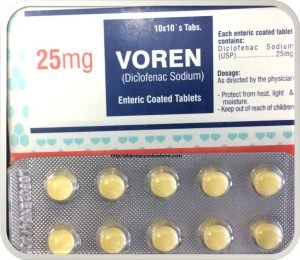
Additional Diclofenac Sodium Side Effects Experiences Reports Occasionally Include:
Body as a Whole:
- Fever
- Infection
- Sepsis
Cardiovascular System:
- Congestive heart failure
- Hypertension
- Tachycardia
- Syncope
Digestive System:
- Dry mouth
- Ecchymosis
- Eosinophilia
- Leukopenia
- Melena
- Purpura
- Rectal bleeding
- Stomatits
Thrombocytopenia
Metabolic And Nutritional:
- Weight changes
Nervous System:
- Anxiety
- Asthenia
- Confusion
- Depression
- Dream abnormalities
- Drowsiness
- Insomnia
- Malaise
- Nervousness
- Paresthesia
- Somnolence
- Tremors
- Vertigo
Respiratory System:
- Asthma
- Dyspnea
Skin and Appendages:
- Alopecia
- Photosensitivity
- Increased Sweating
Special Senses:
- Blurred vision
Urogenital System:
- Cystitis
- Dysuria
- Hematuria
- Interstital nephritis
- Oilguria / Polyuria
- Porteinuria
- Renal Failure
Other Diclofenac Sodium Side Effects, Which Occur Rarely:
Body as Whole:
- Anaphylactic Reaction
- Appetite Change
- Death
Cardiovascular System:
- Arrhythmia
- Hypotension
- Myocardial Infarction
- Palpitations
- Vasculitis
Gigestive System:
- Colitis
- Eructation
- Liver Failure
- Pancreatitis
Hemic and Lymphatic System:
- Agranulocytosis
- Hemolytic anemia
- Aplastic anemia
- Lymphadenopathy
- Pancytopenia
Metabolic and Nutritional:
- Hyperglycemia
Nervous System:
- Convulsions
- Coma
- Hallucination
- Meningitis
- Respiratory System:
- Respiratory Depression
- Pneumonia
Skin and Appendages:
- Angioedema
- Toxic Epidwemal Necrolysis
- Erythema Multiforme
- Exfoliative dermatitis
- Stevens Johnson
- Syndrome
- Urticaria
Special Senses:
- Conjunctivitis
- Hearing Impairment
Vore (Diclofenac Sodium) Drug Interactions
Aspirin:
- However, As with other NSIADs concomitant administration of diclofenac and aspirin is not generally recommended because of the potential of increased adverse effects.
Methotrexate:
- Most importantly, Caution should be used when NSAIDs are administered concomitantly with methotrexate. Methotrexate plasma levels may be increased and result in increased toxicity.
Cyclosporine:
- However, Concomitant therapy with diclofenac sodium may increase cyclosporine’s nephrotoxicity. Caution should be used when diclofenac sodium is administered with cyclosporine.
ACE Inhibitors:
- Furthermore, reports suggest that NSAIDs may diminish the anti-hypertension effect of ACE inhibitors. This interaction should be given consideration in patients taking NSAIDs concomitantly with ACE inhibitors.
Furosemide:
- However, Diclofenac sodium can reduce the natriuretic effect of furosemide and thiazides in some patients. During concomitant therapy with NSAIDs, the patient should be observed closely for signs of renal failure, as well as to assure diuretic efficacy.
Lithium:
- Meanwhile, NSIADs have produced an elevation of plasma lithium levels and a reduction in renal lithium clearance. Thus, when NSAIDs and lithium are administered concurrently, subjects should be observed carefully for signs of ;lithium toxicity.
Warfarin:
- However, the effects of warfarin and NSAIDs on GI bleeding are synergistic, such that users of both drugs together have a risk of serious GI bleeding higher user of either drug alone.
Veron Tablets, Capsules, Injections Precautions
- Diclofenac sodium should not be used concomitantly with diclofenac potassium since both exist in plasma as the same active organic ion.
- Patients on long-term diclofenac sodium treatment should have their hemopoietic system evaluated periodically. periodic hematologic examination (CBC and blood film examination) can detect anemias or blood dyscrasias secondary to the possible gastrointestinal tract or bone marrow toxicity.
- During long-term therapy, kidney function should be monitored periodically.
- If abnormal liver function test results persist or worsen, or if systemic manifestations or clinical signs consistent with liver disease develop, discontinue diclofenac sodium treatment. Liver function should be monitored during long-term treatment with this drug.
- Caution is called for when using diclofenac sodium in patients with hepatic porphyria since diclofenac sodium my trigger an attack.
- The anti-inflammatory, antipyretic, and analgesic effects of diclofenac sodium may mask the usual signs of infection.
- Blurred and/or diminished vision has been reported with the use of diclofenac sodium and other NSAIDs. The ophthalmic examination should be carried out at periodic intervals in any patient receiving this drug for an extended period of time.
- As with other NSAIDs, allergic reactions, including anaphylactic/anaphylactoid reaction, can occur without prior exposure to the drug. Careful questioning for the patient history of asthma nasal polyps, urticaria, and hypotension associated with NSAIDs is important before starting therapy.
Voren (Diclofenac Sodium) Tablets, Injection Warnings:
- Caution required if administrated to patients suffering from or with the previous history of bronchial asthma since NSAIDs have reported causing bronchospasm in such patients.
- NSAIDs should only be given with care to patients with a history of gastrointestinal disease.
- Undesirable effects may be minimized by using the minimum effective dose for the shortest possible duration.
- Side effects are
- Patients on long-term treatment should be monitored and patients with severe hepatic, cardiac or renal insufficiency should be kept under close surveillance as the use of NSAIDs may result in deterioration of renal function. Patients with impaired cardiac or renal function or recovering from major surgery or being treated with diuretics should be considered because of the importance of prostaglandins in maintaining blood flow. The dose should be kept as low possible and renal function should be monitored in these patients.
- NSAIDs should given with care to patients with a history of failure or hypertension since edema has been reported in association with NSAIDs administration.
- If there is persistency in abnormal liver function tests or there are symptoms consistent with liver disease or if there are other manifestations such as rash or eosinophilia, diclofenac sodium treatment should be discontinued. Attack of hepatic porphyria may be triggered in susceptible patients.
- Diclofenac sodium in common with other non-steroidal anti-inflammatory drugs can reversibly inhibit platelet aggregation.
Voren In Pregnancy:
Pregnancy Category C: however, there are no adequate and well-controlled studies in the pregnant women. Consequently, the use of prostaglandin synthetase inhibitors may result in premature closure of the fetal ductus arteriosus or uterine. Therefore not recommended during the last trimester of pregnancy.
Voren In Nursing Mothers:
However, It not known whether this drug excreted in human milk. Because many drugs excreted in human milk and because of the potential for serious adverse reactions in nursing infants from diclofenac sodium, a decision should be made whether to discontinue nursing or to discontinue the drug. Meanwhile, taking into account the importance of the drug to the mother.
Geriatric Use:
Meanwhile, as with NSAIDs caution should exercised in treat the elderly (65 years and older).
Voren (Diclofenac Sodium) Overdose Symptoms And Treatment
Symptoms:
Firstly, the symptoms following acute NSAIDs overdose usually limited to lethargy, Drowsiness, Nause, Vomiting, epigastric pain. However, generally reversible with supportive care. On the other hand, Gastrointestinal bleeding can occur, Hypertension, Acute renal failure, respiratory depression, and coma may also occur. But rare, Anaphylactoid reaction have reported with therapeutic ingestion of NSAIDs and may occur following an overdose
Treatment:.
Most importantly, the patient should managed by symptomatic and supportive care following an NSAIDs overdose. Meanwhile, there is no specific antidotes for the overdosage. Furthermore, Emesis and / or activated charcoal (60 to 100 g in adults, 1 to 2 g/kg in children) and / or osmotic cathartic may be indicated in patients seen within 4 hours of ingestion with symptoms or following a large overdose (5 to 10 time the usual dose). On the other hand, Forced diuresis, alkalinization or urine, hemodialysis, or hemoperfusion may not be useful due to high protein binding.
Voren (Diclofenac Sodium) Contraindications
- Firstly, Voren Tablets contraindicated in patients with known hypersensitivity to diclofenac.
- Secondly, Voren should not be given to patients who have experienced asthma, urticaria. Furthermore, in other allergic-type reactions after taking aspirin or other NSAIDs. Meanwhile, Severe, rarely fatal, anaphylactic-like reaction to NSAIDs have reported in such patients.
- Lastly, Voren contraindicated for the treatment of perioperative pain in the setting of coronary artery bypass graft (CABG) surgery.
Voren (Diclofenac Sodium) Tablets, Injections Storage Instructions
Moreover, store the Voren tablets, injections, and capsules below 30 C room temperature. Furthermore, also protect the medical products from direct sunlight and heat. Above All, always remember that keep all the medicines out of the reach of your small children. Lastly, you must read the packing of Voren for its expiry date which always mentioned on the pack. Meanwhile,, if the medication expired you must not use it to avoid any kind of harmful effects on your life.
More Medical Information: Brexin Tablets (Piroxicam) Uses, Dosage And Side Effects
Voren (Diclofenac Sodium) (25MG 50MG 75MG 100MG) Tablets, Capsules, Injections