
Azomax Tablets Uses Dosage Side Effects
Azomax Tablet contains a well known antimicrobial agent named Azithromycin. Meanwhile it is a remarkably powerful and specific activity of antimicrobial due to their selectivity for high specific targets. These targets are either unique to micro organism or much more important in them than in humans. Azithromycin bleongs to a macrolide antibiotic. It is effective against gram positive bacterias.

More Useful Links: Rigix Tablets
Azomax Tablet Composition
- Each Azomax tablet contains : Azithromycin Dihydrate USP 500 MG Azithromycin
- Azomax Capsule Contains : Azithromycin Dihydrate USP 250 mg Azithromycin
- 5ML Azomax suspension : Azithromycin USP 200 MG as Dihydrate
Azomax (Azihyromycin) Pharmatokinetics
Azomax (Azihyromycin) follow oral administration in humans and azithromycin is widely distributed throughout the body. Meanwhile its bioavailability is approximately 37%. On the other hand, the time taken to reach peak plasma levels is from two to three hours. However, Plasma terminal elimination half life closely reflects the tissue depletion half life of two to 4 days. On the other hand, in the kinetic studies it was shown markedly higher levels of azithromycin in tissue than in plasma (up to 50 times the maximum observed concentration in plasma). Therefore it indicates that the Tablet is highly tissue bound. Concentrations in target tissue such as lungs, tonsils and prostate exceed the MIC90 for likely pathogens after a single dose of Axomax 500 MG.
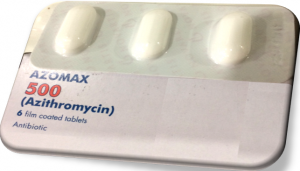
Azomaz Tablet Indications
Azithromycin (Azomax Tablets) normally used and indicated for the patients who are suffering from infections caused by
- Susceptible organisms
- Lower respiratory tract infections including Bronchitis and pneumonia
- Upper respiratory tract infections including otitis media, pharyngitis, tonsillitis and sinusitis
- Skin and soft tissue infections or acne
- Mild to moderate typhoid fever caused by multi products resistant strains.
- In sexual transmitted diseases in men and women
- In uncomplicated genital infections due to tranchomatis
- A second line therapy for typhoid fever caused by S.typhi and S.parathphi.
Azomax Tablet Dosage Administration
Azomax should administered as single dose and as common with many other antibiotics should be taken at least 1 hours before of 2 hours after food. On the other hand always follow the doctor or pharmacist instructions about taking the tablets who recommend it according to one’s physical condition.
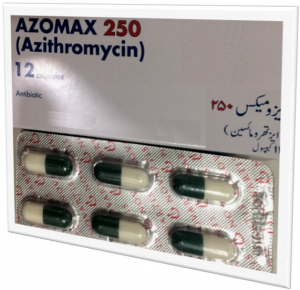
Adults Azomax Dosage
Meanwhile for the respiratory tract infections and skin or tissue infections the total Azomax Dosage is 1.5 G. Which should given as Azomax 500 MG as a single dose daily or 3 times daily. On the other hand alternatively an initial dose of Azomaz 500 MG in the first day may followed by Azomax 250 MG daily for further 4 days.
On the other hand, for sexual transmitted diseases caused by trachomatis Azomax Dose is 1 G given as a single dose. Meanwhile, for typhoid fever the Azomax Dose is Azomax 500 MG to Azomax 1000 MG once daily for 5 to 7 days.
Children Azomax Dosage
Meanwhile there is no information available for children under 6 months of age. However, the dose in children is 10 mg/kg as a single daily dose for 3 days. For typhoid fever therapy given for 7 days. In addition, the dosage for children calculated as under.
Age Weight Dosage (10MG/KG)
- 0.5 - 2.0 4.5 - 12.0 1.5 3.0 ML (45 120 MG)
- 2.5 - 4.0 14.0 - 16.0 3.5 - 4.0 ML (140-160 MG)
- 4.5 - 6.0 17.0 - 20.5 4.5 - 5.0 ML (170-205 MG)
- 6.5 - 8.0 21.5 - 25.0 5.0 - 6.5 ML (215 - 250 MG)
- 8.5 - 10.0 26.5 - 31.0 6.5 - 8.0 ML (265 - 310 MG)
- 10.5 - 12.0 33.0 - 40.0 8.5 - 10.5 ML (330 - 400 MG)
- 12.5 - 14.0 41.0 - 50.5 11.0 - 12.5 ML (410 - 505 MG)
- 14.5 - 16.0 52.0 - 62.0 13.5 - 15.5 ML (520 - 620 MG)
- 16.5 - 18.0 64.0 - 69.0 16.0 - 17.0 ML (640 - 690 MG)
Azomax Tablet Contraindications
Azomax is contraindicated in patients with a known hypersensitivity to azithromycin or any macrolide antibiotics. However always consult your doctor or pharmacist before taking these tablets.
Azomax Tablet Precautions And Warnings
Similarly with any antibiotic, observation for signs of super-infection with non susceptible organisms, including fungi recommended. However as with erythromycin and other macrolides, serious allergic reactions, including angioneurotic oedema and anaphylaxis have reported. On the other hand, some of these reactions which azithromycin have resulted in recurrent symptoms and required a long period of observation and treatment.
Azomax Use In Renal Impairment
No dosage adjustment needed in patienets with mild or renal impairment (Creatinine Clearance > 40 ML/min). However no data available regarding azithromycin usage in patients with more severe renal impairment. Meanwhile, caution should given in using azithromycin in these patients.
Azomax Use In Hepatic Impairment
As live is the principal route to excretion of azithromycin, it should not used in patients with hepatic disease.
Azomax In Pregnancy
Meanwhile animal reproduction studies have demonstrated that azithromycin crosses the placenta, but have revealed no evidence of harm to the foetus. Therefore no adequate and well controlled studies in pregnant women. Since animals reproduction studies are not always predictive of human response, azithromycin should use during pregnancy only if the alternatives not available.
Azomax In Lactation
No data on secretion of azithromycin in women milk available. So azithromycin should only used in lactating women where the alternatives not available.
Azomax Side Effects
Firstly, Azomax (Azithromycin) is generally a well tolerated medicine with a low incidence of side effects. Meanwhile most of the Azomax side effects observed in different patients were generally from mild to moderate in severity. Therefore, majority of the Azomax Side Effects were of gastrointestinal origin with nausea, abdominal discomfort, pain, cramps, vomiting, flatulence, diarrhoea and loose stools being occasionally observed.
On the other hand, allergic reactions such as rashes have occurred and there have also rare reports of serious hypersensitivity reactions. Meanwhile, reversible elevations in liver transaminases have seen with a frequency similar to the comparative macrolides and penicillins used in clinical trials. Transient mild reductions in neutrophil counts have occasionally observed in clinical trials. Although a casual releationship to azithromycin has not been established.
Azomax Interactions
Antacids:
In patients receiving azithromycin and antacids, Azomax should be taken at least 1 hour before or 2 hours after antacid.
Carbamazepine:
In a pharmacokinetics interaction study in healthy volunteers no significant effect found on the plasma levels of carbamazepine or its active metabolite.
Cyclosporin:
Some of the related macrolide antibiotics interfere witht he metabolism of cyclosporin. However in the absence of pharmacokinetics studies or clinical data investigation potential interaction between azithromycin and cyclosporin, caution should be exercised before co-administration of these two tablets. If co-administration is necessary, cyclosporin levels should monitored and the dose adjusted accordingly.
Digoxin:
No interactions have reported in patients who have received concomitant azithromycin and cardiac glycosides. However some of the macrolide antibiotics have reported to impair the metabolism of digoxin in some patients.
Ergot Derivatives:
Because of the theoretical possibility of ergotism, azithromycin and ergot derivaties should not be co-administered.
Warfarin:
In a pharmacokinetics interaction study, azithromycin did not alter the anticoagulant effect of a single 15 mg dose of warfarin administered in healthy volunteers. Azithromycin and warfarin may co-administered but monitoring of the prothrombin time should continued as routinely performed.
Azomax Overdosage
Meanwhile there is no data available for overdosage with azithromycin. However, the typical symptoms of Azomax Overdose or with macrolide antibiotics include hearing loss, severe nausea, vomiting and diarrhoea. On the other hand, gastric lavage and general supportive measures indicated in the condition.
Azomax Storage Instructions Guide
Most importantly keep all the tablets, injections, creams out of the reach of the children. Always keep the tablets, injections at a cool and dry place. On the other hand protect the tablets from direct sun light and heat.
More Useful Information: Adalat Tablets (10 MG, 20 MG, 30 MG, 60 MG)
Azomax Tablets 250 MG, 500 MG Syrup