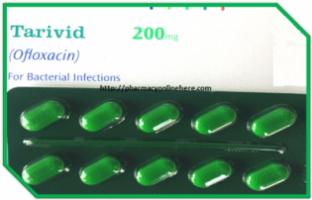
What Is Tarivid 200 MG Tablet Strong Antibiotic Used For?
Tarivid 200 MG Tablets is the brand name of Ofloxacin which is a very useful salt used in many other medications products. It is also considered of Semi Synthetic origin and belongs and categorized to Quinolone. Further, It also belongs to DNA Gyrase inhibitor pharmacological group on the basis of mechanism of action. On the other hand, it also classified in Antibiotic, Quinolone pharmacological medicines groups.
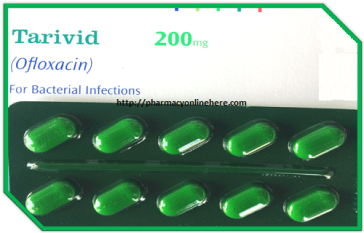
More Useful Links: Brexin Tablets (Piroxicam) Uses Dosage Side Effects Benefits Formula Ingredients Price
Tarivid Tablets Composition Formula Ingredients
Each film coated Tablet contains : Ofloxacin 200 mg as an active ingredient.
Tarivid 200 MG Tablets Properties
Meanwhile, Ofloxacin the active ingredient of Tablets which is a bactericidal Fluoroquinolone antibiotic.
Tarivid 200 MG (Ofloxacin) Tablets Uses & Indications
Firstly, the following indications are restricted to adults. Bacterial infections due to Ofloxacin -susceptible microorganisms, such as
- Renal, urinary tract, prostate, urethral, gonococcal infections
- Infection of soft tissues and skin
- Infection of bones and joints
- Gynecological infections
- Abdominal and biliary tract infection
- Ear, nose, throat infections. However, it is not indicated for the treatment of acute tonsillitis caused by Beta -hemolytic streptococci
- Respiratory tract infections except if the pneumococcal infection is suspected or diagnosed. Since some strains are only partially sensitive to this medicine. It should not be used as the first-choice treatment of community-acquired pneumococcal because of Streptococcus pneumonia
- Prevention of infections due to Ofloxacin Tab susceptible to pathogens prophylaxis of infections. On the other hand, also by selective decontamination of the intestine in patients with a significant reduction in resistance to infections e.g, in neutropenic states.
Antibacterial Spectrum
Most importantly, The following microorganisms may be regarded as susceptible :
- Aeromonads hydrophile
- Branhamella catarrhalis
- Brucella spp
- Chlamydia trachomatous
Citrobacter - Clostridium
- Perfringens
- Enterobacter coli
- Helicobacter jejune
- Klebsiella oxytocic
- Legionella
- Moraxella morganii
- Mycoplasma hominis
- Neisseria gonorrhoeae
- Neisseria meningitides
- Plesiomonas
- Propteus indole +
- Proteus mirabilis
- Proteus vulgaris
- Salmonella
- Serratia
- Shigella
- Staphylococcus aureus methi-S
- Staphylococcus coagulase negative
- Yersinia enterocytic
Intermediate Susceptible Microorganisms
Therefore, for these strains, the sensitivity to the capsules depends on the epidemiology and level of resistance in the country concerned. Acinetobacter, Anaerobic Gram-positive cocci, Bacteroides fragilis, Chlamydia psittacine, Gardner Ella vaginalis, Mycobacterium lepro, Pseudomonas aeruginosa, Streptococcus pneumonia, Streptococcus spp.
The Following Microorganisms Are Usually Resistant
- Acinetobacter baumannii
- Clostridium difficile
- Enterococci
- Listeria monocytogenes
- Staphylococci methi-R
- Nocardia
Uses In Urdu Hindi
Contraindications
Ofloxacin Capsules must not use in:
- In patients hypersensitive to the medicine, other quinolones or any of the excipients.
- Patients with epilepsy
- In the patients with a history of tendon disorders related to fluoroquinolone
- Children or adolescents in the growth phase
- During Pregnancy
- For Breast Feeding women
On the other hand, Judging from animal experiments a risk of damage to the growth plate cartilage in the growing organism cannot be entirely excluded.
200 MG Tablet Uses Warnings
Clostridium Difficile Associated Disease
Diarrhea, particularly if severe, Persistent or bloody, During or after treatment with 200 MG may be symptomatic of pseudomembranous colitis. Meanwhile, If pseudomembranous colitis is suspected. Most importantly, Ofloxacin Tablets must be stopped immediately.
Patients Predisposed To Seizures
Firstly, As with other quinolones, the capsules should use with extreme caution in patients predisposed to seizures.
Tendinitis
However, Tendinitis rarely observed with quinolones may occasionally lead to rupture involving Achilles tendon in particular. Meanwhile, Elderly patients are more prone to tendinitis. Furthermore, The risk of tendon rupture may be increased by co administration of corticosteroids. On the other hand, If tendinitis suspected treatment with these Tablets must be halted immediately.
Tarivid (Ofloxacin) Dosage And Administration
General Dosage:
Tarivid (Ofloxacin) Tablets Dosage and route of administration depend on the type and severity of the infection. Therefore, It generally based on the following guidelines. The Dosing in adults with normal renal function(creatinine clearance > ml/min). Meanwhile, Tab Dose regimens according to authorized indications given in the below table:
Indications Unit Dose MG No. Of Dose Doses Intervals Daily Dose
Infections with susceptible organisms 200 2 12 400 MG
Acute exacerbation chronic bronchitis 400 1 24 400 MG
- Meanwhile, a Daily dose of more than 400 MG must be divided into two separate Doses. And given at approximately equal intervals.
- Secondly, the dose may increase to Ofloxacin 600 MG for the treatment of severe infections or in overweight patients.
Elderly
Consequently, Age in itself does not impose to adapt the Dosage. However, special attention to renal function should be paid in elderly patients. And the Dosage should be adapted accordingly.
Hepatic Impairment
However, It is recommended that a maximum daily dose of Ofloxacin 400 MG be not exceeded. Because of the possible reduction of excretion.
Renal Impairment
Firstly, In patients with impaired renal function the following dosages recommended:
Creatinine Clearance Unit Dose MG No. Of Dose Doses Intervals
50 - 20 ml/min 100 - 200 MG 1 24
<20ml/min** or Hemodialysis or peritoneal dialysis 100 or 200 1 48
- According to the indication or dose interval.
- On the other hand, the serum concentration of this medicine should monitored in patients with severe renal impairment and dialysis patients.
However, when creatinine clearance cannot be measured it can estimated with reference to the serum creatinine level using the following Cockcroft’s Formula for adults:
Duration Of Treatment
Most importantly, the duration of therapy varies according to the course of the disease. Meanwhile, as with antibiotic therapy in the general administration of Tab should continue for a minimum of 48 to 72 hours after the patient has become afebrile or evidence of bacterial eradication has obtained.
Administration
Tarivid Tablets daily dose is up to 400 MG may be given as a single dose. Therefore, In this case, daily doses of more than 400 MG must divide into two separate doses and given at approximately equal intervals. On the other hand, the use is to swallowed with a sufficient amount of liquids. However, It may take on an empty stomach or with meals. Meanwhile, Concomitant administration with antacids should avoid it.
Tarivid (Ofloxacin) Side Effects
Cardiovascular Disorders
Rare: Tachycardia, Temporary hypotension
Congenital, Familial And Genetic Disorders
Isolated Cases: Attacks of porphyria in patients with porphyria.
Blood And Lymphatic System Disorders
Very Rare: Anemia, Hemolytic anemia, Leukopenia, Eosinophilia, Thrombocytopenia
Isolate Cases: Agranulocytosis, Pancytopenia, Bone Marrow Failure
Nervous System Disorders:
Uncommon: Dizziness, Headache,
Rare: Somnolence, Paranesthesia, Dysgeusia, Parosmia,
Very Rare: Peripheral Sensory Neuropathy, Peripheral Sensory Motor Neuropathy, Convulsion, Extra-pyramidal symptoms or other disorders of muscular coordination.
Eye Disorders
Uncommon: Eye Irritation
Rare: Visual Disturbance
Ear And Labyrinth Disorders
Uncommon: Vertigo
Very Rare: Hearing Impaired Like Tinnitus and Hearing Loss
Respiratory, Thoracic And Mediastinal Disorder
Uncommon: Cough, Nasopharyngitis
Rare: Dyspnea, Bronchospasm
Isolated Cases: Pneumonitis Allergic, Severe dyspnea
Gastrointestinal Disorders
Uncommon: Abdominal pain, Diarrhoea, Nausea, Vomiting
Rare: Enterocolitis which may in isolated cases be hemorrhagic,
Very Rare: Pseudomembranous colitis
Renal And Urinary Disorders
Rare: Blood Creatinine increased,
Very Rare: Renal failure
Acute Isolated Cases: Nephritis interstitial acute
Skin And Subcutaneous Tissue Disorders
Uncommon: Pruritus, Rash
Rare: Urticaria, Hot Flush, Hyperhidrosis, Rash Pustular
Very Rare: Erythema multiforme, toxic epidermal necrolysis, photosensitivity reaction, drug eruption, vascular purpura, vasculitis which can lead in exceptional cases to skin necrosis
Isolated Cases: Steven-Johnson syndrome
Musculoskeletal And Connective Tissue Disorders
Rare: Tendinitis,
Very Rare: Arthralgia, Myalgia, Tendon Rupture like. Achilles tendon, as with other fluoroquinolones this undesirable effect may occur in 48 hours of starting treatment and may be bilateral.
Isolated Cases: Rhabdomyolysis and myopathy, Muscular weakness which may of special importance in patients with myasthenia gravis.
Metabolism And Nutrition Disorders
Rare: Anorexia
Isolated Cases: Hypoglycemia in diabetics treated with hypoglycemic agents.
Infections And Infestation
Uncommon: Fungal infection, Pathogen Resistance
Vascular Disorders
Rare: Hypotension
Immune System Disorders
Rare: Anaphylactic reaction, Anaphylactoid reaction, Angioedema
Very Rare: Anaphylactic shock, anaphylactoid shock
Hepatobiliary Disorders
Rare: Hepatic enzymes increased(ALAT, ASAT, LDH, Gamma-GT or Alkaline Phos Phatase) and blood bilirubin increased.
Very Rare: Jaundice cholestatic
Isolated Cases: Hepatitis which may be severe
Psychiatric Disorders
Uncommon: Agitation, Sleep disorder, Insomnia
Rare: Psychotic disorder, Hallucination, Anxiety, Confessional State, Nightmare, Depression
Isolate Cases: Psychotic Disorder and depression with self endangering behavior including suicide ideation or suicide attempt.
Overdosage Symptoms & Treatment
However, the most important signs to expected following acute overdose are CNS symptoms like.
- Confusion
- Dizziness
- Impairment of consciousness
- Seizures
Furthermore, the gastrointestinal reactions like
- Nausea
- Mucosal erosions.
Meanwhile, In the event of Ofloxacin Overdose, gastric lavage and symptomatic treatment should implement. However, No specific antidote exists.
Tarivid 200 MG Drug Storage Instructions
Most importantly always make sure to keep all your medical products out of the reach of your children. Meanwhile, Store the drug below 30 C temperature. On the other hand, protect from heat and sunlight. Lastly, you must check the packing before 200 MG Tab Use for its expiry date which printed on the packing. Therefore, if the product expired you must not use it to avoid any threats to your life.
More Drug Information: Lamnet (Lamotrigine) Tab Uses Dosage Side Effects Formula Ingredients Price
Tarivid (Ofloxacin) 200 MG Tablets Price Details
- Price In Pakistan= 280 PKR
- Price In India= 198 INR
- Price In USA= 2 USD