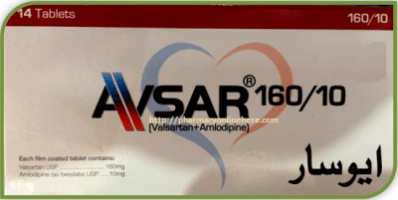
What Is Avsar Tablet & Its Uses Dosage Side Effects?
Avsar Tablet is the combination of very useful drugs named Valsartan and Amlodipine (Besylate). Amlodipine (Besylate) is a calcium channel blocker which lowers the blood pressure, relax heart muscles and dilates the heart blood vessels to prevent spasm. While Valsartan belongs to angiotensin receptor antagonists and similar to losartan.
Useful Medications: Tenormin 25 MG 50 MG 100 MG Tablets Capsules Uses Dosage Side Effects Benefits Formula Ingredients Price
What Is Valsartan And What It Used For?
Valsartan Medications generally belongs to the angiotensin II receptor antagonists drug class. It normally used for the treatment of patients with high blood pressure, heart failure as well as diabetes kidney disease. The mechanism of action of the valsartan helps to block the vasoconstrictor and aldosterone secreting effects of the angiotensin ii medications by selectively blocking the binding of angiotensin II to the AT1 receptor in human vascular mouth muscle and adrenal gland tissues. Most importantly, valsartan medication first discovered during studies in USA in year 1990. Meanwhile in United States Of America it first approved to use in medicines in year 1996. It mainly sold under the brand name of Diovan and Avsar in most parts of the world.
What Is Amlodipine And What It Used For?
Amlodipine medications are belongs to the Calcium Channel Blockers drug class family. It used for the patients to lower the blood pressure by relaxing the blood veins so that the heart does not have to pump very hard. Meanwhile it mainly used for the treatment of high blood pressure and coronary artery disease in patients of all ages. On the other hand, it is sold under different brand names world wide like Istin, Norvasc, Avsar, and Norliqva. Amlodipine first discovered during studies in UK in year 1982. Meanwhile it first approved to use in medicines in USA in year 1990.
Uses In Urdu Hindi
Avsar Plus Tablet Formula Ingredients
Each film coated tablet contains
- Avsar 80/5
Valsartan USP 80 mg
Amlodipine as Besylate USP 5 mg
- Avsar 160/5
Valsartan USP 160 mg
Amlodipine as Besylate USP 5 mg
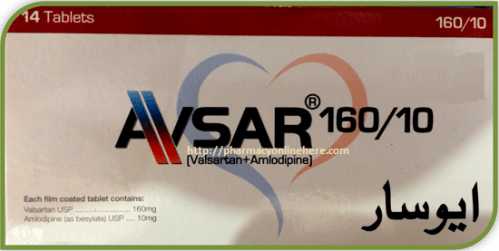
- Avsar Tablet 160/10
Valsartan USP 160 mg
Amlodipine as Besylate USP 10 mg
Avsar Tablet 80/5 160/10 Uses & Indications
Valsartan, Amlodipine Besylate Tablets indicated and mainly used for the treatment of symptoms related to hypertension. However the treatment should not initiated with this fixed Dose combination.
Avsar Valsartan Amlodipine Contraindications
Hypersensitivity to the active substances, dihydropyridine derivatives, or to any of the excipients: Severe hepatic impairment: biliary cirrhosis and cholestasis: Severe renal impairment (GFR <30ml/min/1.73 m2) and patients undergoing dialysis, pregnancy.
Avsar Amlodipine Valsartan Tablet Precautions
Hypotension, sodium and volume depleted patients; Excessive hypotension was seen in 0.4 of patients with uncomplicated hypertension treated with the combination in placebo controlled studies. In patients with an activated renin angiotensin system (such as volume and salt depleted patients receiving high doses of diuretics ) who are receiving angiotensin receptor blocks, Symptomatic hypotension may occur. Correction of this condition prior to administration of this medicine or close medical supervision at the start of treatment recommended. If hypotension occur with the medicine the patients should placed in the supine position and if necessary given an i.v. infusion of normal saline. Treatment can continued once blood pressure has stabilized Increased angina. Rarely patients, particularly those with severe obstructive coronary artery disease have developed documented increased frequency duration. And severity of angina on starting calcium channel blocker therapy or at the time of dosages increase.
Beta Blockers Withdrawal
Amlodipine is not a beta blocker and therefore given no protection against the dangers of abrupt beta blocker withdrawal. Any such withdrawal should be by gradual reduction of beta blocker .
Renal Artery Stenosis
There has no long term use of this medicine in patients with unilateral or bilateral renal artery stenosis. However, since other drugs that affect the renin angiotensin system (RAAS) may increase blood urea and serum creatinine in patients with bilateral or unilateral renal artery stenosis. Monitoring of both parameters no experience of the safe use of these capsules in patients who have had a recent kidney transplantation. Aortic and mitral valve stenosis, obstructive, hypertrophic cardiomyopathy. As with all other vasodilators, special caution indicated in patients suffering from aortic or mitral stenosis, or obstructive, hypertrophic cardiomyopathy.
Hyperkaliemia
Concomitant use with potassium supplements, potassium, sparing diuretics, salt substitutes containing potassium, or other drugs that may increase potassium levels (heparin) etc. should be used with caution and with frequent monitoring of potassium. Use in patients with heart failure post myocardial infarction. In general calcium channel blocker should used with caution in patients with heart failure. As a consequence of inhibiting the renin Anglo tension aldosterone system, changes in renal function may anticipated in susceptible individuals. In patients with severe heart aldosterone system treatment with angiotensin converting enzyme (ACE) inhibitors. And angiotensin receptor antagonists has associated with oliguria and progressive azotemia and (rarely ) with acute renal failure and death. Similar outcomes reported with valsartan.
Use of this medicine in patients with heart failure or post myocardia infarction commonly results in some reduction in blood pressure. But discontinuation of therapy because of continuing symptomatic hypotension not usually necessary provided dosing instructions are followed. Patients with more complicated post myocardial infarction course may at increased risk for hypotension and renal dysfunction. Caution should observed when inhibiting therapy inpatients with heart failure or post myocardial infarction. An assessment of renal function should always be conduced in patients with heart failure or post myocardial infarction. An increase in the mortality rate among patients who received a combination of Valsartan, ACE inhibitors and beta blocker has been observed in clinical trials. Concurrent administration of ACE inhibitors and beta blocker and Valsartan is not recommended.
Hepatic Injury
Cases of clinical significant liver disease have occurred with some angiotensin II receptor antagonists . Hepatitis has been reported rarely with it .
Use In Patients With Hepatic Impairment
Valsartan is mostly eliminated unchanged via the bile whereas amlodipine is extensively metabolized by the liver in patients with mild to moderate hepatic impairment without cholestasis, it should be used with caution and careful monitoring of liver function tests should be preformed. The daily dose of this combination tab should not exceed 5/80 patients with severe hepatic impairment. Biliary cirrhosis or cholestasis should not take it.
Use In Patients With Renal Impairment
However, No dosage adjustment of (Valsartan /Amlodipine besylate) is required for patients with mild to moderate renal impairment. Monitoring of creatinine and potassium levels is advised for patients with moderate renal impairment patients with severe renal impairment should not taken these tabs.
Primary Hyperaldosteronism
Patients with primary hyperaldosteronism; Patients with primary hyperaldosteronism should not be treated with valsartan as their renin angiotensin system is affected by the primary disease .
Children And Adolescents
The safety and efficacy of this medicine in children and adolescents (below the age of 18 years ) have not been established.
Effects On Ability To Drive And Use Machines
Generally, No studies on the effects on the ability to drive and use machines have yet performed. When driving vehicles or using machines it should not taken into account that occasionally dizziness or weariness may occur .
Avsar Use in Pregnancy (Category D)
Valsartan /Amlodipine Besylate Tablets must not be used during pregnancy planning to become pregnant. Healthcare professionals prescribing any agents acting on the RAAS should counsel women of childbearing potential about the potential risk of these agents during pregnancy. If pregnancy detected during therapy, it must immediately discontinued as soon as possible to avoid any type of harmful effects to fetus.
Use in Lactation
However, It do not known whether these medicines products excreted in human milk. Meanwhile, there shown no studies with the combination in lactating animals. It has therefore not advisable for women who are baby feeling to use (Valsartan/ Amlodipine beslyate ) .
Avsar Valsartan Amlodipine Tablet Side Effects
Infection And Infestations
Common: Nasopharyngitis, influenzas
Immune System Disorders
Rare; Hypersensitivity
Eye Disorders
Rare visual disturbance
Psychiatric Disorders
Rare: Anxiety
Nervous System Disorders
Common: Headache
Uncommon: Dizziness , somnolence, dizziness postural , paranesthesia
Ear and labyrinth disorders
Uncommon: Vertigo
Rare: Tinnitus
Cardiac Disorders
Uncommon; Tachycardia, palpitations
Rare: Syncope
Vascular disorders
Uncommon: Orthostatic hypotension
Rare: Hypotension
Respiratory, Thoracic And Mediastinal Disorders
Uncommon; Cough, Pharyngolaryngeal pain
Gastrointestinal Disorders
Uncommon: Diarrhoea, nausea, abdominal pain, constipation, dry mouth
Skin And Subcutaneous Tissue Disorders
Uncommon; Rash, erythema
Rare: Hyperhidrosis, exanthema, pruritus
Musculoskeletal And Connective Tissue Disorders
Uncommon: Joint swelling, back pain arthralgias
Rare: Muscle spams, sensation of heaviness
Renal And Urinary Disorders
Rare: Pollakiuria, polyuria
General Disorders And Administration Site Conditions
Common: Oedema, pitting oedema, facial oedema, peripheral, fatigue, flushing, asthenia, hot flush. Additional information on the combination in double blind active or placebo controlled completed clinical trials. Meanwhile, The incidence of peripheral oedema has statistically lower in patients treated with the combination (5.8) than in patients treated with amlodipine monotherapy.
Laboratory Evaluation:
However, Very few hypertensive patients treated with amlodipine/ valsartan showed notable changers in laboratory test results from baseline. Therefore a slightly higher incidence of notably increased blood urea nitrogen in the both medicines (5.5) groups as compared to the placebo group (4.5). Additional information on individual components Adverse reaction previously reported with one of the individual components may occur with it even if not observed in clinical trials.
Avsar Tablet Dosage Administration
A patients whose blood pressure not adequately controlled on amlodipine or valsartan monotherapy may switched to combination therapy with these capsules. The recommended Avsar Dose one tablet per day of either 80/ 5 mg, 160/5 mg or 160/ 10 mg . When clinically appropriate direct change from monotherapy to the fixed dose combination may considered. Meanwhile, For convenience patients receiving this combination may switched to this medication containing the same component doses from separate tab. Both the medicines monotherapy can taken with or without food. On the other hand, the medication should consistently taken with or without food. Therefore, It recommended to take it with some water.
The Elderly
Caution advised when increasing the dose in elderly patients .
Children And Adolescents
This medicine generally not recommended for use in patients aged below 18 years due to a lack of safety and efficacy data.
Patients with renal and hepatic impairment
However, No dosage adjustment required for patients with mild to moderate renal impairment. But caution should exercised when administering it to patients with hepatic impairment or biliary obstructive disorders. Most importantly, Monitoring of creatinine and potassium levels advised for patients with moderate renal impairment. On the other hand, Liver function should monitored in patients with mild to moderate renal hepatic impairment. Therefore, The daily dose of this medicine should not exceed 80/5 mg in patients with mild to moderate hepatic impairment without cholestasis. In addition, it generally contraindicated in severe hepatic and renal impairment and patients undergoing dialysis.
Valsartan Overdose
Symptoms: However, there is no experience of over dosage with this medicine yet. However, Overdosage with this medication may result in pronounced hypotension with dizziness. Which could lead to depressed levels of consciousness, circulatory collapse and shock. On the other hand, Overdose with amlodipine may result in excessive peripheral vasodilation with marked hypotension and possibly reflex tachycardia.
Dysrhythmias may occur following overdose with any calcium antagonists . Hypotension and bradycardia usually seen within one to five hours following overdose. Hypotension can persist for longer than 24 hours despite treatment. Meanwhile, Cardiac rhythm disturbances have noted to persist for up to seven days. Marked and potentially prolonged systemic hypotension up to and including shock fatal outcome have also reported .
Treatment: Administration of activated charcoal to healthy volunteers immediately or up to two hours after ingestion of amlodipine has been shown to significantly decrease amlodipine absorption. Clinically significant hypotension due to the overdose calls for active cardiovascular support including frequent monitoring of volume, And respiratory function , elevation of extremities , and attention to circulating fluid volume and urine output . A vasoconstrictor may helpful in restoring vascular tone blood pressure, provided that no contraindication to its use. Meanwhile, Intravenous calcium gluconate beneficial in reversing the effects of calcium chancel blocker. Both valsartan and amlodipine unlikely to removed by hemodialysis.
Avsar Tab Drug Storage Instructions
Firstly, store the drug below 30 C temperature. On the other hand, protect from sunlight and moisture. Most importantly, always remember that keep all your medical products out of the reach of your children.
More Drug Information: Cutivate Cream Use, Administration Side Effects Benefits Formula Ingredients Price
Avsar (Valsartan, Amlodipine) Tablets 80/5, 160/5, 160/10 Price Details
- Price In Pakistan: 539 PKR
- Price In USA: 5 USD
- Price In India: 499 INR