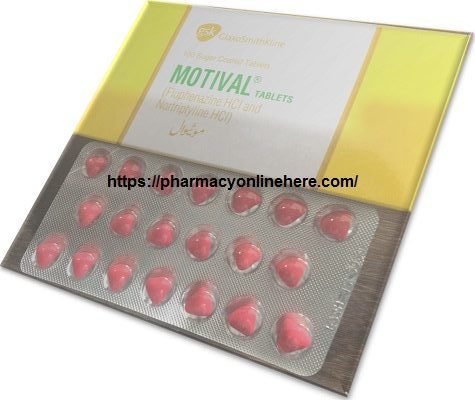
Tab Motival Tablets Uses Dosage Side Effects For Anxiety & Sleep Details
Tab Motival Tablets 05 MG and 10 MG is mainly a combination of Fluphenazine and Nortriptyline HCL. These are two active ingredients that are combined and formulated to create a powerful medication. Fluphenazine is a well-known antipsychotic medication that is commonly used to treat various mental illnesses, including schizophrenia and two-minded, depression disorder. It is classified as a neuroleptic medication, which means it works by blocking certain neurotransmitters in the brain.
Nortriptyline HCL, on the other hand, is a tricyclic antidepressant that belongs to the dibenzo cycloheptene type of drug. It is actually an active metabolite of amitriptyline and is commonly used to treat depression and chronic neurogenic pain. By increasing the levels of certain neurotransmitters in the brain, Nortriptyline HCL helps to alleviate the symptoms of depression and pain.
Together, these two medications work synergistically to provide a comprehensive treatment option for patients suffering from mental illness and chronic pain. However, it is important to note that these medications should only be taken under the supervision of a qualified healthcare professional, as they can have serious side effects if not used properly.
More Useful Medicines: Panadol Extra Ultra Advanced Cold And Flu Rapid Action Tablets Uses, Dosage, Side Effects, Price
Motival Tablets Uses & Indications
Motival tablets are primarily used for the short-term treatment of patients who are experiencing moderate to severe symptoms of mixed anxiety and depression. In addition, this medication is also commonly prescribed by doctors to treat various sleep disorders in different patients. However, it is important to note that Motival tablets should only be taken under the guidance and supervision of a qualified healthcare professional.
Interestingly, Motival tablets have also been used in pigeons for various treatments. However, the safety and efficacy of this medication in animals should be thoroughly evaluated by a veterinarian before administering it to any animal. Overall, Motival tablets are a versatile medication that can be used to treat a wide range of conditions, but it is crucial to use them responsibly and in accordance with medical guidance
Motival Tablet Dosage & Administration
Motival is generally administered in all patients orally. Therefore, Antidepressant effects may not occur for 2 or more weeks after the initiation of motivating therapy. Meanwhile, Increasing the dose will not shorten this period but rather increase the incidence of adverse reactions.
Motival Tables For Adults:
Typically, an adult would take one 0.5/10mg Motival tablet three times a day. Alternatively, the total daily dose may be taken at bedtime. However, if there is no response after four weeks, an alternative treatment should be considered. It is important to note that the course of treatment with Motival should not exceed three weeks to avoid neurological or cardiovascular complications.
Which the older are particularly susceptible to. In general, a lower dosage should be administered to older patients than to younger adults. And the response should be carefully monitored to determine if a gradual increase in dosage is necessary.
Tab 5 MG, 10 MG Contraindications
Most importantly, the medication is generally contraindicated in patients with:
- patients with a history of hypersensitivity to Motivate, any of the excipients, any other phenothiazine, or dibenzazepine.
- During the acute recovery period after myocardial infarction.
- Patients with suspected or established subcortical damage.
- In comatose or severely depressed states.
- In confusional states with excitation
- Patients with blood dyscrasias or liver damage.
- The first trimester of pregnancy.
- Patients under 18 years of age
Motival Tablets Use In Pregnancy and Lactation
Most importantly, this medicine is contraindicated in the first trimester of pregnancy. In the later period, the product should be administered only if clearly needed and under direct medical supervision. On the other hand, Neonates exposed to conventional or atypical antipsychotics, including fluphenazine during the third trimester of pregnancy are at risk of side effects including extrapyramidal or withdrawal symptoms that may very in severity and education following the birth. They have been reports of agitation, hypertension, hypotension, tremor, somnolence, respiratory, distress, food intake, and disorders.
Tab Drug Interactions Details
Most importantly, use motival tablets with caution in patients known to be poor CYP2D6 metabolizers.
Amphetaminic, anorectic agents: Concurrent administration may produce antagonistic pharmacological effects.
Antacids, antidiarrheal agents: Concurrent administration may produce antagonistic pharmacological effects. of antacids should space at least 1 hour before or 2-3 hours after the dose.
Antiarrhythmics (class) Concurrent administration of the product with quinidine, procainamide or similar agents may alter the metabolism of nortriptyline, resulting in decreased total body clearance of this drug, and may cause dose-related additive effects on cardiac conduction.
Beta-Blockers: Plasma levels of fluphenazine hydrochloride and the beta-blocker may be increased. Dosage reduction of both drugs is recommended. CNS Depressants, alcohol, and analgesics:
On the other hand, The patient’s response to alcohol and other CNS depressants such as hypnotics, sedatives, or strong analgesics may be exaggerated while taking it combined use with narcotic analgesics may cause hypotension as well as CNS or respiratory depression.
Fluoxetine:
Meanwhile, a Greater than two-fold increase in previously stable plasma levels of nortriptyline occurred when fluoxetine medicine was administered.
Methyphendrate:
Concurrent administration of tricyclic antidepressants with methylphenidate may cause paranoia. ideation.
Adverse Events:
A few adverse that have been reported with tricyclic antidepressants other than nortriptyline are included below because of the pharmacologic similarities among the tricyclic antidepressant drug. Many of the events have been reported with fluphenazine hydrochloride use at higher doses than those in this combination.
Blood and lymphatic system disorder:
Sublingual adenitis, agranulocytosis, aplastic anemia, leukopeni9a, eosinophilia, purpura, thrombocytopenia, and pancytopenia.
Immune system disorder:
Cross-sensitivity reaction with other tricyclic drugs, asthma, edema (general laryngeal, facial or of the tongue), anaphylactic reaction, (see skin subcutaneous tissue disorder).
Nervous system disorder: headache, confusion, drowsiness, dizziness, lethargy, delirium, numbness, tingling paresthesia of extremities, incoordination, ataxia, tremors, peripheral neuropathy, seizures, alteration in EEG patterns, alternation, is CDF proteins, tinnitus, cerebral edema, extrapyramidal symptoms, including pseudo parkinsonism, dystonia, dyskinesia, akathisia, oculogyric crisis, opisthodomos, and hyperreflexia (most often these extrapyramidal symptoms are reversible, however, they have persisted after long-term use in some patients); neuroleptic malignant syndrome, suicidal ideation, and suicidal behavior.
Renal and urinary disorder: Urinary retention, delayed micturition, polyuria bladder paralysis, urine frequency nocturia.
Pregnancy, puerperium, and perinatal condition: neonatal withdraw syndrome and extrapyramidal symptoms. Reproductive system and breast disorder: gynecomastia in the male, breast enlargement, galactorrhea in the female, testicular swelling, abnormal lactation, menstrual irregularities, false results on pregnancy tests, impotence, and libido changes.
Overdose Symptoms & Treatment Guide
Overdose causes serious toxicity. The severity of the patient’s response to overdose is generally conditioned by such factors as age, the amount ingested, the amount absorbed, and the interval between ingestion and the start of treatment. However, regardless of age, an overdose should regard as serious and potentially fatal and treated as a medical emergency.
The major signs and symptoms of toxic overdose with tricyclic antidepressants are primarily extensions of common adverse reactions. Symptoms of overdose may begin within several hours of ingestion.
- CNS symptoms
- Restlessness
- Drowsiness
- Sedation confusion
- Excitement
- Agitation
- Muscle rigidity
- Ataxia
- Hyperactive reflexes
- Choreographic movement
- Abnormal
- Eye movements.
Treatment: The drug should be withdrawn and symptoms treated sportively in managing overdose, considering pharmacokinetics. On the other hand, Blood and urine levels of tricyclic antidepressants are normally unreliable predictors of clinical management. As well as outcome and primarily useful for diagnosing overdose.
Most importantly, Intensive care procedures are recommended, including establishing and maintaining a patent airway. As well as ensuring adequate oxygenation and ventilation and monitoring and support of the cardiovascular system.
Other Medicines: Prothiaden Tablets 25, 75 MG (Dosulepin Hydrochloride) Uses, Dosage, Side Effects Benefits Formula Ingredients Price
Motival Tablets Syrup Injection Capsules Price
- Price In Pakistan: 499 PKR
- Price In India: 380 INR
- Price In USA: 7 USD