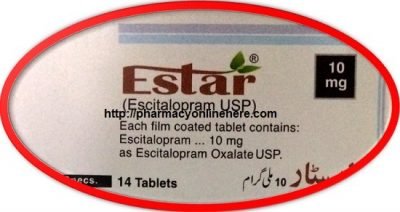
What Is Estar Tablets Escitalopram 5 MG, 10 MG, 20MG And What It Used For?
Estar Tablets is the formulation of a famous and an effective drug named Escitalopram. Generally the medicine used to treat several type of symptoms related to depression and anxiety. Meanwhile it helps to restore the balance of serotonin in human brain which make feel relax.
What Is Escitalopram And What It Used For?
Escitalopram is an isomer of citalopram and antidepressant medication which belongs to the selective serotonin reuptake inhibitor drug class which also known as SSRI. Moreover the medicine sold under different brand names in India, Pakistan, USA and most parts of Europe. The famous brand names includes Estar, Lexapro, Citanew and Cipralex. Meanwhile, Escitalopram used effectively for the treatment of depression and panic disorders. Most importantly, the Escitalopram medicine first found during research in United States Of America in year 1978. However, it first approved to use in medicines in USA in year 2002.
More Useful Links: Avamys Nasal Spray Uses, Dosage, Side Effects, Ingredients, Price
Composition & Formula Ingredients
- Each Estar 5 MG Tablet Contains : Escitalopram 5 MG as Escitalopram Oxalate USP
- Estar 10 MG Tablets Contains : Escitalopram 10 MG as Escitalopram Oxalate USP
- Each Estar 20MG Tablet Contains : Escitalopram 20MG as Escitalopram Oxalate USP
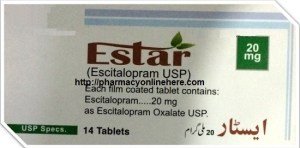
Escitalopram Estar Tablet Uses & Indications
EStar (Escitalopram ) tablets are indicated for the treatment of the disorders like
- Major depressive disorder
- Panic disorder with or without agoraphobia.
- Social anxiety disorder (social phobia).
- Generalized anxiety disorder.
- obsessive-compulsive disorder.
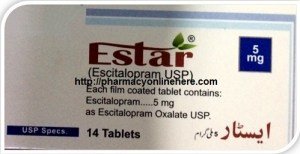
Uses In Urdu Hindi
Estalopram Estar Tablet Dosage And Administration
Dosage For Major Depressive Episodes
Usual Estar Tablets dosage is 10 mg once daily. However, depending on individual patient response, the dose can increased to a maximum of 20 mg daily. In adolescents , dose increment should made after at least 3 weeks. Meanwhile, the Dosage increment should made in adults after a period of 1 week. Usually 2-4 weeks are necessary to obtain antidepressant response. Meanwhile, after the the symptoms resolve, the treatment for at least 6 months is consolidation of the response.
Dosage For Panic Disorder With Or Without Agoraphobia
An initial doses of 5 mg is recommended for the fist week before increasing the dose to 10 mg daily. Meanwhile, the dose may be further increase, up to a maximum of 20 mg daily, dependent on individual patient response. However, the maximum effectiveness is reached after about 3 months. On the other hand, the treatment lasts several months.
Dosage For Social Anxiety Disorder
Usual dosage is 10 mg once daily.Usually 2-4 weeks are necessary to obtain symptom relief. The dose may subsequently, on depending on individual patient response., be decreased to 5 mg social anxiety disorder is a disease with a chronic course, and treatment for weeks is recommended to consolidate response. Long-term treatment of responders has been studied for 6 months and can be considered on an individual basis to prevent relapse; treatment benefits should be re-evaluated at regular interval.
Dosage For Generalized Anxiety Disorder
Initial dosage is 10 mg once daily. Depending on the individual patient response, the dose may be increased to a maximum of 20 mg daily .
Long-term treatment of responders has been studied for at least 6 months in patients receiving 20 mg daily . Treatment benefits and be re-evaluated at regular intervals.
Dosage For Obsessive-Compulsive Disorder
Initial dosage is 10 mg once daily. Depending on the individual patients response,the dose may be increased to a maximum of 20 mg daily. As OCD is a chronic disease, patients should be treated for a sufficient period to ensure that they are symptom free.
Dosage Adjustment And Dosing Consideration In special Populations:
Elderly Patients (>65 years of years )
Initial dosage is 5 mg once daily. Depending on individual patient response, the dose may be increased to 10 mg daily The efficacy of escitalopram in social anxiety disorder has not been studied in elderly patients.
Children And Adolescents (<18 years )
Dosage increments should made more slowly in children and adolescents less then 18 years of age.
Renal Impairment Dosage adjustment not necessary in patients with mild or moderate renal impairment. Most importantly, caution advised in patients with severely reduced renal function .
Hepatic Impairment
An initial dose of 5 mg daily for the first two weeks of treatment recommended in patients with mild or moderate hepatic impairment. Depending on individual patient response, the dose may increased to 10 mg daily . Caution and extra careful dose titration advised in patients with severely reduced hepatic function.
Poor Metabolizers Of CYP2C19
For patients who known to poor metabolizers with respect to cyp2c19, an initial dose of 5 mg daily during the first two weeks of treatment recommended . Depending on individual patient response, the dose can increased to mg daily.
Administration Requirements
Ester administered as a single daily dose and may be taken with or withoutfood.
Treatment Discontinuation:
Abrupt discontinuation should avoided. When stopping with treatment with ecitalopram the dose should gradually reduced over a period of at last one to two weeks in order to reduce the the risk of discontinuation symptoms. If intolerable symptoms occur following a decrease in the dose or upon discontinuation of treatment, then resuming the previously prescribed dose may considered.
Estar Tablets Contraindications
- Most importantly, in patients Hypersensitivity to the active substance.
- Concomitant treatment with no-selective, irreversible monomineoxidase inhibitors (MAO-inhibitors) contraindicated due to the risk of serotonin syndrome.
- Meanwhile, the combination of escitalopram with reversible mao-inhibitors (e.g moclobemide) or the reversible non-selective mainhibitor linezolid contraindicated due to the risk of onset of a serotonin syndrome.
- Furthermore, Escitalopram contraindicated in patients with known qt interval prolongation or congenital long qt syndrome.
- On the other hand, Escitalopram also contraindicated inpatients taking pimozide due to the risk of developing qt prolongation and torsades de pointes.
Estar Tablets Side Effects
Blood And Lymphatic System Disorders
Frequency not known: Thrombocytopenia
Immune System Disorders
Rare: Anaphylactic Reaction
Endocrine Disorders
Not Known: Inappropriate AdH secretion
Metabolism And Nutrition Disorders
Common:Decreased appropriate, increased appetite, weight increased
Uncommon: weight decreased
Not known: Hyponatraemia, anorexia
Psychiatric Disorders
Common: Anxiety, restlessness, abnormal dreams,libido decreased,female :anorgasmia
Rare : aggression, depersonalize, hallucination
Not known: Dyskisnesia, movement disorder, conovlion, psyhomitor,restlessness/akathisia
Eye Disorders
Uncommon: Mydriasis, visual disturbance
Ear And Labyrinth Disorders
Uncommon: tachycardia
Rare : Bradycardia
Not known: Electrocardiogram qt prolonged ventricular arrhythmia including-torsade de points
Vascular Disorders
Not known : Orthostatic hypotension
Respiratory Disorders Thoracic And Mediastimal Sediastinal Disorders
Common: Sinusitis, yawning
Uncommon :Epistaxis
Gastrointestinal Disorders
Very common : Nausea
Common: Diarrhea, constipation vomiting ,dry dry mouth
Uncommon :Gastrointestinal haemorrhges (including rectal haemorrhade)
Hepatobilliary Disorders
Not Known : Hepatobilliary, liver function test abnormal
Skin And Subcutaneous Tissue Disorders
Common: Sweating increased
Uncommon: Urticaria, alopecia, rash ,pruritus
Not Known: Ecchymosis , angioedemas
Musculoskeletal And Connective Tissue Disorders
Common: Arthralgia, myalgia
Renal And Urinary Retention
Unknown : Urinary Retention
Reproductive System And Breast Disorders
Common: Male :ejaculation disorder, impotence
Uncommon: female: metrorrhagia, menorrhagia
Not known : Galactorrhoea, male : priapism
General Disorders And Administration Site Conditions
Common: Fatigue, pyrexia
Uncommon: Oedema
Estar Tablets Drug Interactions
Irreversible Non-Selective MAOIs
Firstly, the cases of serious reactions have reported in patients receiving an ssri in combination with a non-selection .irreversible monoamine oxidase inhibitor ,and in patients who have recently discontinued ssri treatment and started on such maoi treatment.
Reversible, Selective MAO-A Inhibitor (Moclobemide)
Firstly, due to the risk of serotonin syndrome,the combination of escitalopram with a mao-a inhibitor such as moclobemide contraindicated.
Reversible, Non-Selective MAO-B Inhibitor (Selegiline)
Most importantly, In combination with selegiline (irreversible mao-b inhibitor) the caution required due to the risk of developing serotonin syndrome.
Drugs Prolonging Qt Interval
Co-administration of escitalopram with other drugs that prolong the qt interval , such as class la and iii antiarrhythmics, antipsychotics (e.g phenothiazine derivatives, pimozide, haloperidol). Or tricyclic antidepressants, certain antimicrobial agents (e.g. sparfioxacin, moxifloxacin, erythromycini, pentamidin, anti-malarial treatment particularly halofantrine). And certain antihistamines (e.g. astemize, mizolastine), contraindicated.
Serotonergic Drugs
Firstly, Co-administration of escitalopram with serotonergic drugs such as (triptans, tricyclic antidepressants, fentanyl, lithium, tramadol, tryptophan, buspirone, and St. John’s wort) and with drugs that impair metabolism of serotonin (in particular, MAOIs and also others, such as linezolid and intravenous methylene blue.
Drugs Lowering The Seizure Threshold
However, SSRIs can lower the seizure threshold. Secondly, caution advised when concomitantly using other medicinal products capable of lowering the seizure threshold (e.g. antidepressants, tricyclic’s, SSRIs), neuroleptics (phenothiazines, thioxanthene’s and butyrophenones), mefloquine, bupropion and tramadol).
Anticoagulant/ Antiplatelet Drugs
Altered anti coagulant effects may occur when Escitalopram combined with oral anticoagulants. However, Patients receiving oral anticoagulant therapy should receive careful coagulation monitoring when Escitalopram started or stopped. On the other hand, Concomitant use of non-steroidal, anti-inflammatory drugs (NSAIDs) and antiplatelet drugs such as aspirin, clopidogrel, ticlopidine, dipyridamole etc) also increase bleeding tendency.
Drugs Including Hypokalemia/ Hypomagnesaemia
Most importantly, the caution warranted for concomitant use of hypokalemia/hypomagnesaemia. Or inducing medicinal products with Escitalopram as these conditions increases the risk of malignant arrhythmias.
Estar Tablets Use In Special Populations
Estar Use In Pregnancy
Firstly, Escitalopram should not used during pregnancy clearly and only after careful consideration of the risk/benefit. US FDA pregnancy category C.
Meanwhile, Neonates should observed if maternal use of Escitalopram continues into the later stage of pregnancy. Most importantly, in the third trimester. Furthermore, the abrupt discontinuation should avoided during pregnancy.
Meanwhile, The following symptoms may occur in the neonate after maternal SSRI/SNRI use in later stages of pregnancy :respiratory distress after material ,aponia, seizures , temperature, tremor, jitteriness, irritability, lethargy, constant curing , somnolence and difficulty sleeping, these symptoms could be due to either serotonergic effects or discontinuation sleeping
Nursing Mothers
Most importantly, It expecting that it will be excreted into human milk. consequently breast-feeding not recommended during treatment.
Pediatrics
Escitalopram not approved for use in patients less then 12 years of age because safety and efficacy has not established. Meanwhile, the safety and effectiveness of this tab has established in patients 12 to 17 years of age in major depressive disorder but not in Generalized Anxiety Disorder. In addition, long -term safety data in children and adolescents concerning growth, maturation and cognitive and behavioral development are lacking.
Renal Impairment
Lastly, Dosage adjustment not necessary in patients with mild or moderate renal impairment.
Estar Tablets Over Dosage Symptoms & Treatment
Toxicity
Firstly, Escitalopram overdose limited and many cause involve concomitant overdoses of over drugs. Therefore, In the majority of cases mild or no symptoms have reported. Fatal cases of this medicine overdose have rarely reported with these capsules alone: the majority of cases have involved overdose with concomitant medications Dose between 400 and 800 mg tab alone taken with any severe symptoms.
Symptoms
Most importantly, the symptoms seen in reported overdose of escitalopram include symptoms mainly related to the central nervous system (ranging from dizziness, tremor, and agitation to rare cases of serotonin syndrome , convulsing ,and coma), the gastrointestinal system (nausea/vomiting), and the cardiovascular system (hypotension , tachycardia, QT interval prolongation, and arrhythmia ) and electrolyte / fluid balance conditions .
Treatment
However, there is no specific antidote Establish and maintain airway ensure adequate oxygenation and respiratory function. Moreover, Gastric lavage and the use of activated charcoal should considered. However, Gastric lavage sings monitoring recommended along with general symptomatic supportive measures.
On the other hand, ECG monitoring advised in case of overdose in patients with congestive heart failure/ bradyarrhythmia’s, in patients concomitant medications that prolong the QT interval , or in patients with altered metabolism, e.g. liver impairment.
Estar Tablets Storage Instructions
Firstly, you must keep the medicine away out of the reach of your children. On the other hand, protect the tablets from direct sunlight and heat exposure. Most importantly, store the medicine below 30 C temperature and always keep in mind that do not freeze your medicine.
More Medical Information: Spiromide Tablets (Spironolactone + Furosemide) 40 MG Tablets Uses Dosage Side Effects Price
Estar Escitalopram 5MG, 10 MG, 20 MG) Tablets Price Details
- Price In Pakistan
- Price In USA
- Price In India